Kyoto Yakimono Week – WAN wan ONE
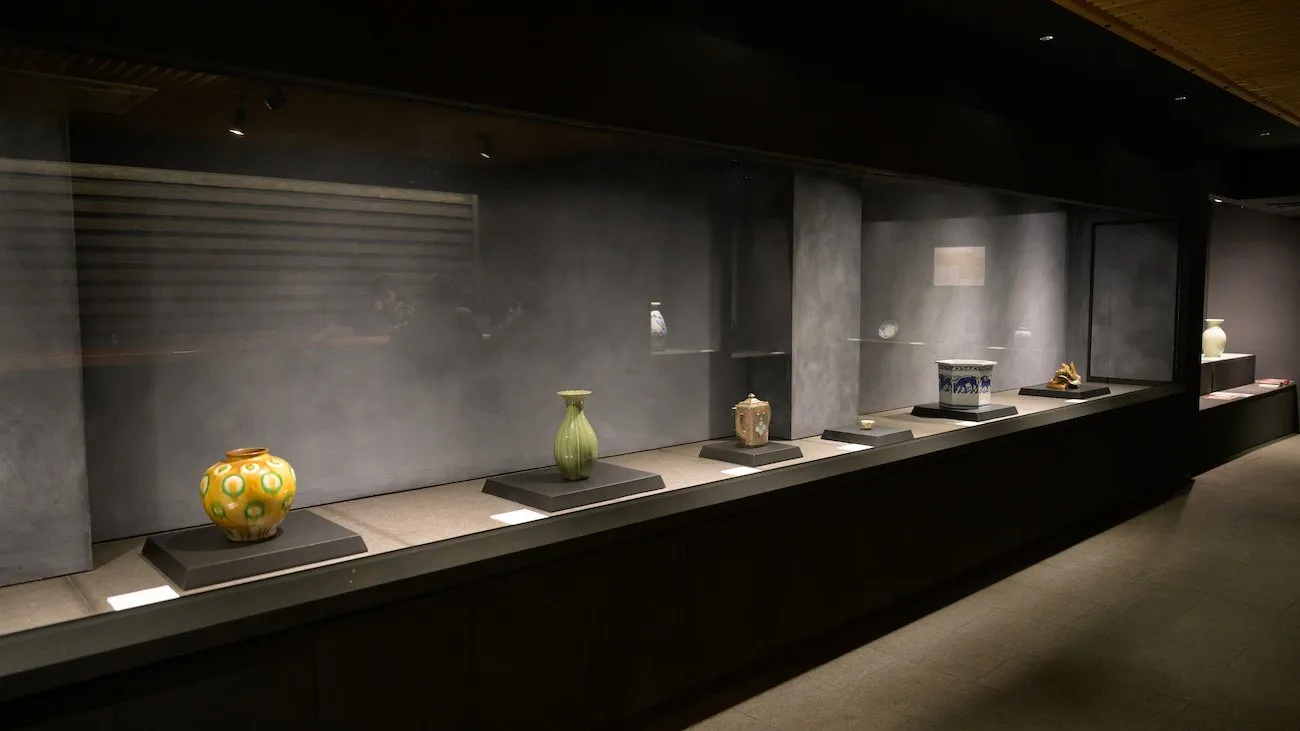
Kyo-yaki ceramics spread mainly through the Higashiyama area from around the early Edo period, against the backdrop of the growing popularity of the tea ceremony.
A wealth of ceramic forms developed to suit different uses and ways of life. Kyo-yaki has been passed down from the modern era to the present as a broad and diverse ceramic tradition.
Many ceramic artists, including Ninsei Nonomura and Kenzan Ogata, worked to establish the reputation of Kyo-yaki. What thoughts inspired them as they devoted themselves to making ceramics? And how did they spend their everyday lives?
Held during the 12th edition, this exhibition brought together works kept in the homes of ceramic artists active in Kyoto, focusing mainly on the 1940s to the 1980s, as part of an exhibition series.
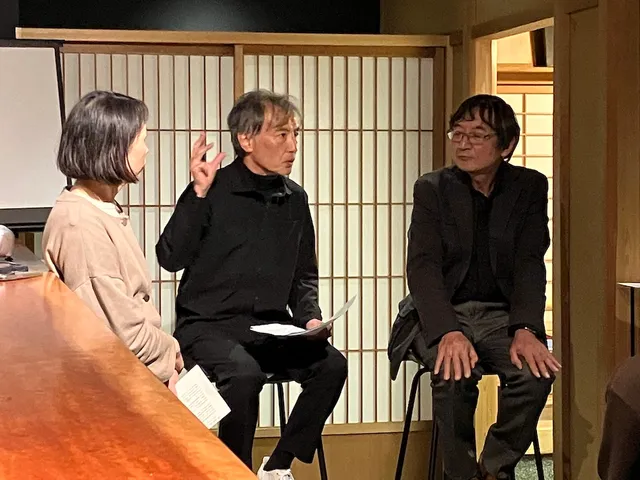
A talk event was also held alongside the exhibition. Participants enjoyed hearing about sides of the artists known only to their families and friends, as well as unexpected connections and shared memories.
Exhibiting Artists
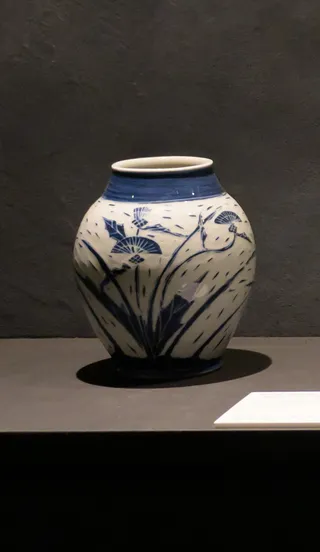
Yuzo Kondo
(1902–1985)
Vase with a Thistle Design Scratched through Cobalt Blue
A work using the same design and technique as the piece first submitted to and accepted by Teiten in 1928 (Showa 3).
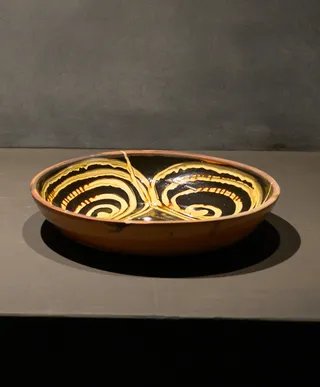
Kanjiro Kawai
(1890-1966)
Large Bowl with a Poured Slip Design (Nagashigaki Obachi)
A work using the same design and technique as the piece first submitted to and accepted by Teiten in 1928 (Showa 3).
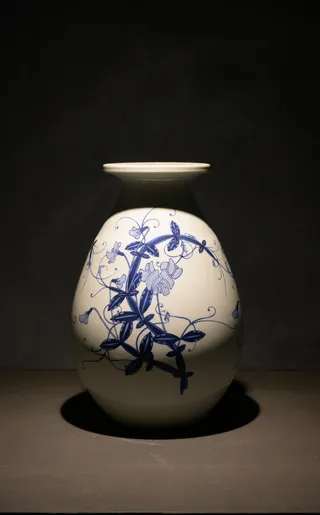
Rokubei Kiyomizu VI
(1901 - 1980)
Blue-and-White Vase with Sweet Peas
1933
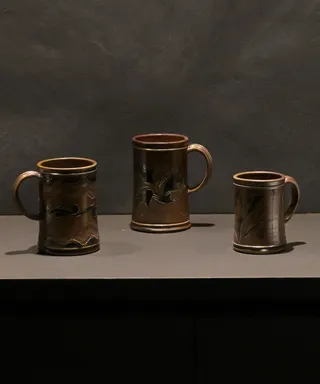
Kako Morino
(1899–1987)
Salt-Glazed Handled Cup
Made in the early Showa era. Inspired by German salt glazing, the artist built a dedicated salt-glaze kiln on the studio grounds to make this work. As it has no white slip coating, it is thought to be among the earliest of these salt-glazed works.
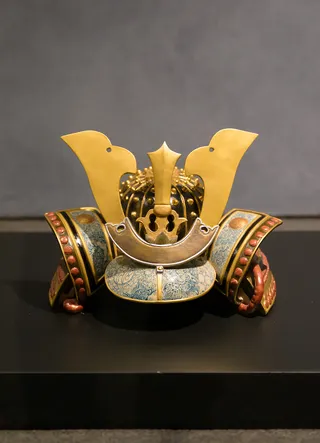
Toya Sawamura I
(1876 - 1943)
Polychrome Helmet-Shaped Ornament
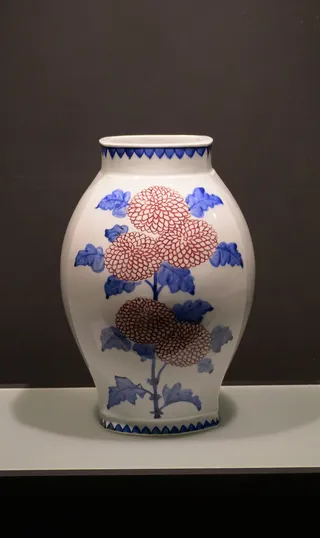
Einosuke Kawai
(1893 - 1962)
Vase with Floral Designs in Cobalt Blue and Underglaze Copper Red
Thought to have been made in the early Showa era. Chrysanthemums are painted in underglaze copper red and orchids in cobalt blue. The body is made of porcelain clay.
Isso Yagi
(1894-1973)
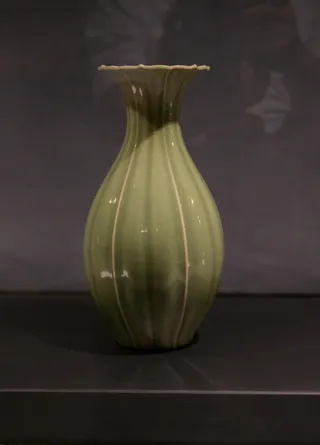
Celadon Vase with a Lobed Rim
A Tenryuji-type celadon fired in a climbing kiln in the early Showa era. The body is made of iron-bearing porcelain clay, and fine bubbles extend throughout the glaze. It is relatively thickly made, with a substantial weight that matches its imposing appearance.
Bunsai Ogawa III
(1886-1939)
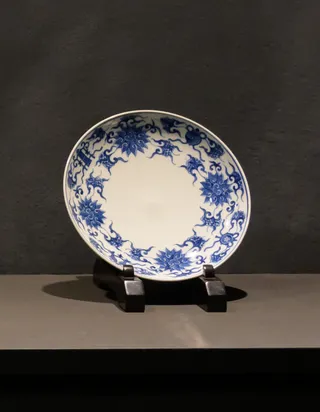
Blue-and-White Eight-Sun Plate
During the third generation, works seem to have been sold mainly to Japanese customers such as traditional restaurants. From the first through the third generations, the studio made porcelain with blue-and-white or overglaze decoration.
Kosai Miyagawa
(1897-1987)
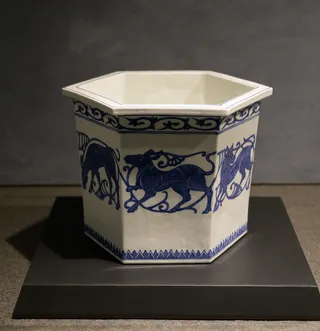
Hexagonal Blue-and-White Brazier for a Kettle
Exhibited at the 13th Imperial Fine Arts Academy Exhibition (Teiten) in 1931 (Showa 6).
Suiko Ito
(1894-1980)
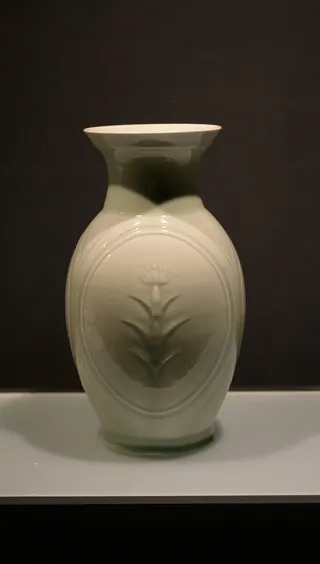
Yellow-Glazed Vase with Floral Designs
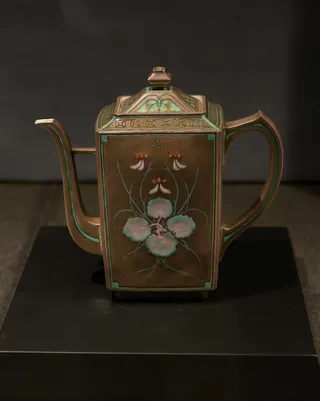
Shokoku Kano
(1899-1965)
Porcelain Water Ewer with Embroidered-Style Floral Decoration
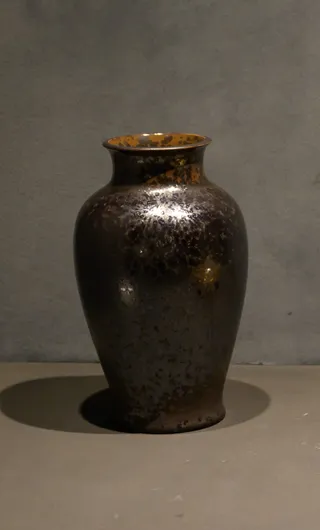
Rokubei Kiyomizu V
(1875–1959)
Yosei (Shining Stars) Vase
Made in the early Showa era. Inspired by German salt glazing, the artist built a dedicated salt-glaze kiln on the studio grounds to make this work. As it has no white slip coating, it is thought to be among the earliest of these salt-glazed works.
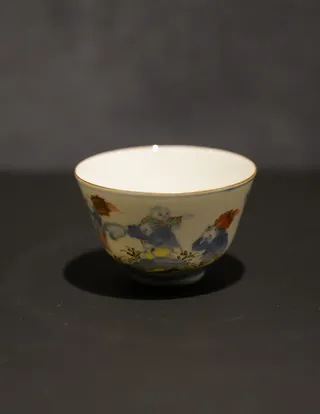
Dohachi Takahashi VI
(1881-1941)
Sencha Tea Bowl with Chinese Children in Overglaze Enamels
Chinese children and pine trees are painted in cobalt blue; after firing, gold and overglaze enamels were applied.
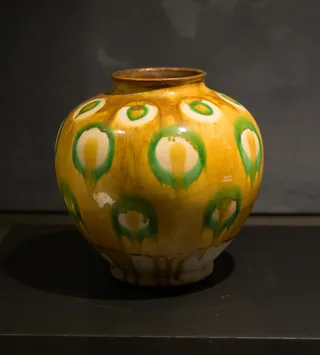
Sozan Suwa
(1883-1952)
Tang-Style Three-Color Jar
Made in 1926 (Taisho 15). It was included in the Exhibition of Sozan I, II and III, held in 1971 to mark the 50th memorial year of Sozan I, and also appears in the catalogue.